What kind of world do we want to live in?
The question is: What kind of world do we want to live in? The question appears time and again in Instilling Ethical Excellence. It is not a trifling one. We make the world we live in one act and one decision at a time. Small and not so small. Few of us pause long enough to think deeply as we go about our everyday lives busily meeting our everyday needs. Thomas Hobbes in his Leviathan (1651) describes the necessity of a government to curb man’s avaricious drives and that without some overarching sovereign regime makes life “lonely, solitary, nasty, brutish, and short,” not unlike what he saw in both high and low places surrounding him in constantly warring seventeenth century Europe.
Two centuries later, Charles Darwin published his On the Origin of Species (1859) leading his cousin Social Darwinist Herbert Spencer to coin the term “Survival of the Fittest” describing the struggle to survive being won by the strongest and fiercest of the social jungle.
Between Hobbes and Darwin, Enlightenment social and political theorists posited that man could be able to live in harmony with each other only insofar as they created a covenant that spells out how they ought to act towards each other. This express and implied covenant specified ways and means that served, protected, and preserved the desired social order. Precursors of that covenant had been in existence going back to the time of mankind living in hunter/gatherer families and clans and were memorialized in oral traditions that prefigured what has come down to us today as the Golden Rule originally stated in the negative form “Do not do to others what you do not want done to you.”
Long story short: Codes of conduct, rules of what’s right and wrong, have been with us for as long as two or more people tried living together without conflict. As civilization developed and everything became increasingly complicated, the ripples of individual conduct began to affect more and more people in more and more complicated ways. Meanwhile, everyday living went on under its own momentum and people tended to lose sight of how their conduct might affect others near and far.
The right and wrong of things needs to be carefully thought and worked out. But in the rough and tumble of the real world other matters became more pressing and the ephemeral consciousness of ethical rights and wrongs faded from the foreground of attention. People were far too busy to bother with deep ethical thinking, and the art and science of it withered. Moreover, “ethics” became a philosophical specialty, further distancing it from everyday and everyman practice. It was happily handed over to elite “ivory tower” thinking-class experts ensconced safely away from the maddening crowds, when in fact it was the madding crowds who needed their ethical skills sharpened the most.
*******
Back to the opening question: What kind of world do we want to live in? One in which “ethical consciousness” has been defaulted to elite academic ethicists who can be called in when something goes terribly wrong or when issues become too complex for the common man, now unaccustomed to deep thought? One in which the capacity for deep ethical thinking has succumbed to neglect? One in which that part of the brain trainable to be ethics conscious and alive has been reduced by indolent inexertion to a sleep-walking state?
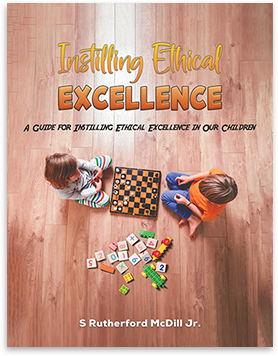
We hope not. And this resource hopefully will keep alive that capacity that allows everyman to be his or her own expert ethicist, able, even eager, to think deeply and broadly about the right and wrong of things that daily confront them in the very ordinary wear and tear of everyday living.
Post Views : 59